
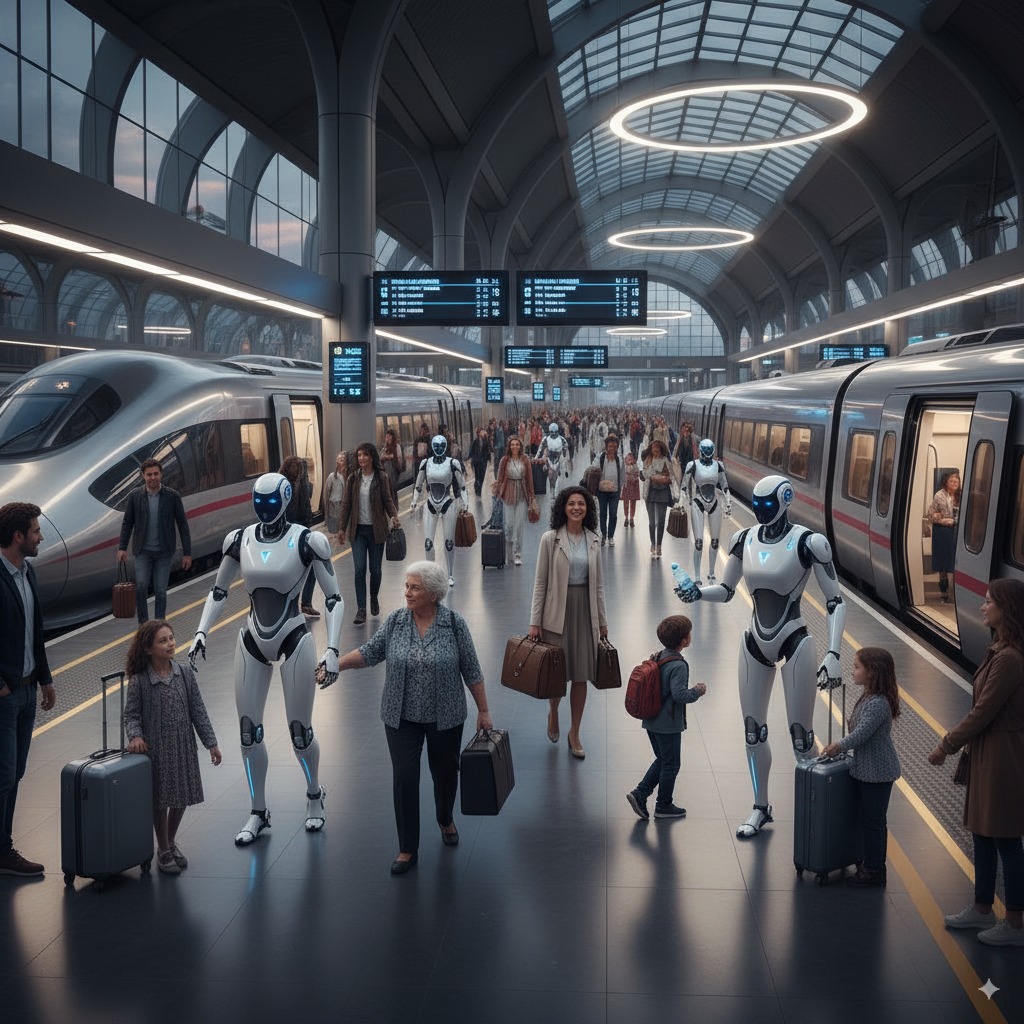
If you’ve been involved in technology for any length of time, you’ll know how much we love jumping on the hype cycle. From Blockchain to Bitcoin, Platforms [as a service] to Post Quantum, there’s always something over the horizon promising transformative change. We’ve been talking AI for a while. However, the conversation has now shifted to Agentic AIs (AI Agents), and they’re certainly poised to take centre stage in 2026. But is this another hype, or is the constant reference to Agents warranted?
There is no doubt AI has the potential to impact public transportation at an Operator or Agency level – enhanced route planning, fare management planning, and optimising passenger communication. But the conversation is moving to the customer. A world where my agent plans my journey, picks the best payment method, tells me what I should be doing in the station or street. This begs the question: Am I walking blindly into a world where my choice has been taken away?
Unlike traditional algorithms or static software solutions, these intelligent agents are capable of learning, decision-making, and real-time adaptation. The amount that they dynamically engage with passengers, operators, and urban infrastructure, can significantly enhance the efficiency and functionality of the transportation network, creating a more streamlined and responsive public transit experience.
These AI agents will provide a highly personalised travel experience by anticipating commuter needs and offering tailored solutions. They’ll analyse my travel history, my journey preferences and give me real-time feedback. My agent can optimise routes to avoid congestion and suggest faster alternatives. They will coordinate my route to seamless multimodal connections, including buses, trains, and rideshares. Leveraging data such as GPS tracking, weather conditions, and passenger load levels, my agent should improve my journey, and in doing so contribute to enhanced overall network performance.
By analysing variables like commuter density, time of day, and seasonal fluctuations, these agents can adjust fares to manage ridership and optimise revenue. For instance, reduced fares during off-peak hours may encourage increased use of public transport, while higher fares during peak times can help mitigate overcrowding. These adaptive pricing models will enable agencies to balance financial sustainability with equitable service provision, ensuring accessibility for all user groups. Additionally, AI Agents can provide fare recommendations to passengers, suggesting the most cost-effective ticket options based on travel frequency and patterns, which helps improve the overall customer experience and makes public transport more attractive compared to other modes of travel.
But while public transport agencies can utilise AI Agents to implement dynamic fare management strategies, such as demand-responsive pricing and off-peak discounts. How comfortable will consumers be with their agent making the payment experience truly frictionless? And will my agent know that the fastest route, might not be the best route for me. What if walking across a car park late at night, might cut 3 mins off my journey but will have me looking over my shoulder fearful of late-night solo travel? How will my agent manage that.
Navigating public transport used to feel like solving a puzzle under pressure; timetables, transfers, ticketing systems all demanding my attention. Now, with my agentic AI companion, the journey unfolds seamlessly. It anticipates delays, reroutes me dynamically, and even handles payments without fuss. I feel empowered by the ease, yet I can’t help but wonder: am I still choosing my own path? The AI suggests the “optimal” route, but optimal for whom? Me, or the transit agency’s operational priorities? I tap, I go, I pay exactly as the system prefers. It’s brilliant, but I’m left questioning whether convenience has quietly traded away my autonomy.
In semi-urban and rural areas, where transportation demand is more variable, AI Agents will play a critical role in enhancing accessibility. By applying predictive analytics, these agents can adjust schedules and dispatch vehicles efficiently to underserved areas, ensuring that even remote communities receive consistent and reliable public transport services. This demand-responsive approach will help bridge the accessibility gap in regions with fluctuating transport needs. Furthermore, AI Agents can work with smaller, on-demand transit services to create an integrated network that responds to real-time requests. By utilising advanced algorithms and cloud-based systems, these agents can dynamically allocate vehicles based on demand patterns, ensuring optimal coverage. Additionally, real-time data sharing between transit services and centralised AI platforms can enhance coordination, enabling seamless service for users while minimising wait times and resource wastage. making transportation more flexible and accessible for people who may not live near fixed-route services. This capability is particularly valuable for elderly populations or individuals without access to personal vehicles, allowing them to maintain independence and participate fully in their communities.
As AI Agents evolve, their capabilities in integrating transit planning, dynamic fare optimisation, and real-time passenger interaction will fundamentally transform public transportation. This evolution will lead to a smarter, more sustainable, and more inclusive transit system, ultimately benefiting all users through improved convenience, reduced travel times, and better resource allocation. The integration of AI will also help reduce the environmental impact of public transportation by optimising vehicle deployment, minimising empty trips, and encouraging greater use of public transit options.
The future of public transport will be one where AI-driven intelligence ensures that the system is responsive, efficient, and tailored to meet the diverse needs of its users, ushering in a new era of connected and sustainable urban mobility. In the advent of Agentic AI, the transportation industry has an opportunity to lead on best practice around transparency and ensuring consumers always know the decision processes behind their personalised experiences and aren’t left feeling as though they have no recollection of the decisions made on their behalf.